Why Chronic Fatigue Won't Go Away: Understanding the Root Causes of Exhaustion in Women
Chronic fatigue is wrapped in complexity and too often misunderstood — especially in women between roughly the ages of 35 and 60. Many feel drained despite rest, unsure why their energy won’t return. This article walks through the common root causes — from hormonal shifts and nervous system stress to environmental triggers like mold — so you can see how they connect and take practical steps toward feeling like yourself again. We’ll also cover why gut health matters, how holistic programs can help, and simple, at‑home strategies to manage symptoms.
What Are the Main Causes of Chronic Fatigue in Women?
For many women, chronic fatigue comes from several interacting sources: hormone imbalances, nervous system dysregulation, and exposures in the environment (mold and mycotoxins are common culprits). These factors can throw off sleep, mood, digestion, and daily energy rhythms. Pinpointing the mix that applies to you is the first step toward a targeted recovery plan.
How Does Hormone Imbalance Lead to Persistent Fatigue?

Shifts in estrogen, progesterone, and related steroid hormones have a direct effect on sleep, mood, and stamina. When these hormones are out of balance, it’s common to experience ongoing tiredness, trouble sleeping, and mood swings. Treating hormone imbalance—whether through lifestyle changes, targeted nutrition, or medical guidance—can restore energy and improve overall resilience.
Clinical research supports a link between certain steroid hormone patterns and chronic fatigue in women.
Steroid Hormone Imbalances in Women with ME/CFS Myalgic encephalomyelitis/chronic fatigue syndrome (ME/CFS) produces long‑lasting fatigue and reduced daily activity after physical or mental exertion. While ME/CFS affects both sexes, it is more common in women. In comparisons across groups, female ME/CFSsa participants had higher levels of 11‑deoxycortisol (vs. healthy controls and ME/CFSmm) and higher 17α‑hydroxyprogesterone (vs. healthy controls). Female ME/CFSmm participants also showed increased progesterone compared to healthy controls. Sex and disease severity‑based analysis of steroid hormones in ME/CFS, LE León, 2024
What Role Does Nervous System Dysfunction Play in Exhaustion?
A chronically overactive sympathetic nervous system — the “fight or flight” side of our nervous system — can keep your body in a state of tension that drains energy and blocks healing. Over time this heightened arousal reduces recovery capacity and increases feelings of burnout. Learning to calm and rebalance the nervous system is a cornerstone of restoring steady energy.
Multiple studies report a higher occurrence of sympathetic dominance in women with conditions that overlap chronic fatigue.
Sympathetic Nervous System Dysfunction in Female Chronic Fatigue Patients This review indicates sympathetic predominance is common across conditions such as fibromyalgia, chronic fatigue syndrome, irritable bowel syndrome, and interstitial cystitis. Notably, 42% of the reviewed studies were conducted exclusively in female participants. Sympathetic nervous system dysfunction in fibromyalgia, chronic fatigue syndrome, irritable bowel syndrome, and interstitial cystitis: a review of case‑control studies, 2014
How Does Mold Illness Contribute to Chronic Fatigue Symptoms?
Mold and mycotoxin exposure are frequently missed contributors to chronic fatigue. Even low‑level, ongoing exposure at home or work can trigger fatigue, brain fog, and a range of other symptoms. For people whose symptoms don’t respond to typical treatments, evaluating the living and work environment is often revealing.
Research has detected mycotoxins in some people with chronic fatigue, supporting an environmental connection worth investigating.
Mycotoxin Detection in Chronic Fatigue Syndrome Patients Researchers identified mycotoxins in urine samples from patients with chronic fatigue syndrome after evaluating mold exposure and testing for mycotoxin presence. Detection of mycotoxins in patients with chronic fatigue syndrome, 2013
What Are the Signs of Mold-Related Fatigue and Brain Fog?
Mold‑related symptoms often include persistent exhaustion, difficulty concentrating or remembering, and respiratory complaints like coughing or wheeze. Because these signs overlap other conditions, proactive screening for mold exposure can speed correct diagnosis and more effective treatment.
How Can Mold Exposure Affect Hormones and the Nervous System?
Mycotoxins can interfere with hormone production and with nervous system signaling, amplifying fatigue and cognitive issues. Addressing environmental exposure alongside medical and lifestyle interventions helps reduce triggers that keep symptoms cycling.
Why Is Gut Health Important for Energy Levels and Fatigue Recovery?

Your gut influences inflammation, nutrient absorption, and even brain chemistry — all critical for energy. Imbalances in gut bacteria (dysbiosis) can drive systemic inflammation and create nutrient shortfalls that leave you feeling wiped out. Restoring gut balance is often a key piece of a successful fatigue recovery plan.
How Does Gut Imbalance Cause Brain Fog and Exhaustion?
When the gut microbiome is off, it can raise inflammatory cytokines that affect brain function and energy regulation. Simple, evidence‑guided changes — improving fiber, diversity of plants, and targeted probiotics when appropriate — can reduce fog and help rebuild stamina.
What Detoxification Protocols Support Gut and Nervous System Health?
Detox protocols that support gut integrity and nervous system recovery typically combine dietary adjustments (more whole foods, less processed sugar), targeted supplements, and strategies that support liver function and gentle elimination pathways. Functional lab testing can clarify individual needs and guide a personalized, safe detox approach.
What Holistic Wellness Programs Help Address Chronic Fatigue Root Causes?
Holistic programs bring together nutrition, nervous system retraining, hormone assessment, and environmental remediation to address chronic fatigue at its roots. Because causes often overlap, a coordinated plan that treats the whole person tends to yield the most sustainable results.
How Do Personalized Root Cause Assessments Identify Your Unique Fatigue Triggers?
A root cause assessment helps map your health history, symptoms, and daily patterns to pinpoint likely drivers of fatigue. That focused conversation lets practitioners recommend next steps — whether testing, lifestyle adjustments, or specific therapies — that match your situation.
What Benefits Do Comprehensive Programs Offer for Hormone and Nervous System Balance?
Comprehensive programs provide ongoing guidance, accountability, and the layered tools needed to rebalance hormones and soothe the nervous system. With tailored protocols, education, and support, many women regain steady energy and feel more confident managing their health long term.
How Can You Naturally Manage Chronic Fatigue Symptoms at Home?
Home strategies focus on small, consistent habits that support hormones and nervous system function. Over time these adjustments can make a meaningful difference in daily energy and recovery capacity.
Which Lifestyle Changes Support Hormonal and Nervous System Health?
Regular Exercise: Gentle, consistent movement — think walking, yoga, or light resistance training — helps regulate hormones and builds energy without overtaxing the system.
Balanced Diet: Prioritize whole foods, healthy fats, lean proteins, and plenty of vegetables to stabilize blood sugar and supply nutrients that support hormone production and the gut microbiome.
Stress Management: Daily practices like breathwork, short restorative breaks, and sleep hygiene techniques calm the nervous system and improve resilience.
What Curated Wellness Products Aid in Fatigue Recovery?
Thoughtfully chosen supplements and botanicals — for example, B vitamins, adaptogens, and targeted gut support — can support energy production and stress adaptation when used appropriately. Work with a practitioner to select products that fit your needs and avoid unnecessary or conflicting supplements.
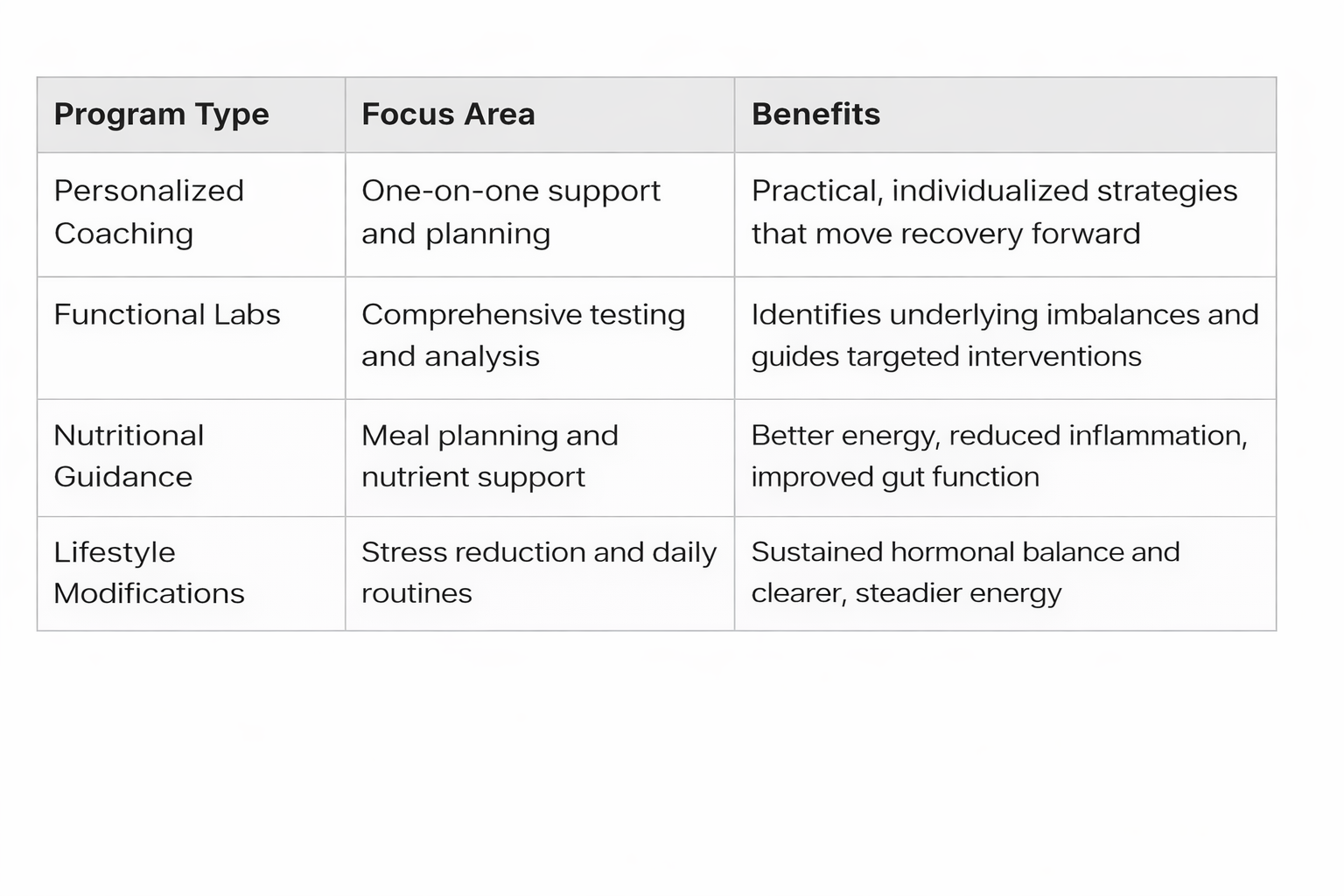
A well-rounded holistic program that offers personalized coaching, functional labs, nutritional guidance, and lifestyle modifications can be very beneficial in addressing the specific root causes of your fatigue. This combination of program elements provides a comprehensive and coordinated approach, often offering the most complete path back to vitality.