
Rejuvenate Your Life Holistic Wellness: Functional Diagnostic Nutrition Practitioner March 2026 Review
Holistic wellness coaching is increasingly recognized as a powerful way to support whole-person health. This review explains the core principles of holistic wellness and highlights methods that help women restore balance and thrive. Rejuvenate Your Life Holistic Wellness (RYL) has emerged as a leader in root-cause health coaching and functional diagnostic nutrition, offering programs that target hormonal imbalance, chronic stress, and lifestyle-related health concerns. RYL’s tailored coaching plans aim to address underlying causes so clients see sustainable change. Below we outline the benefits of holistic coaching, the role of functional diagnostic nutrition, and real-world results that show these approaches work.
Research reinforces how central hormonal balance is to many dimensions of women’s health.
Hormonal Balance & Women's Health: Reproductive, Mental, Metabolic Impacts
This review examines the complex connections between hormonal balance and women’s health across several physiological areas. Drawing on current studies and clinical findings, it shows how hormones influence reproductive function, mental health, metabolism, and bone health. The analysis highlights how imbalances — including conditions like polycystic ovary syndrome (PCOS) — contribute to fertility and reproductive challenges. It also details links between hormone fluctuations, especially in estrogen, and mood-related conditions such as premenstrual syndrome (PMS) and postpartum depression.
The Importance of Hormonal Balance for Women's Health, 2023
Introduction to Holistic Wellness Coaching
Holistic wellness coaching treats mind, body, and spirit as interconnected and looks beyond symptoms to the root causes of health challenges. Coaches integrate nutrition, lifestyle, stress management, and mindset work to guide clients toward balance and resilience. For women, this means care that recognizes hormonal cycles, emotional health, and life-stage needs. Typical coaching includes a personalized assessment, clear goals, and ongoing support to help clients build lasting, practical habits.
Deep Dive into Root Cause Health Coaching

Root cause health coaching zeroes in on the underlying drivers of symptoms rather than masking them. Coaches conduct a detailed health history, evaluate lifestyle patterns, and consider emotional well-being to identify what’s contributing to a client’s struggles. By addressing root causes, clients often see deeper, longer-lasting improvements — more energy, steadier moods, and better overall function. Case examples consistently show meaningful, sustainable change when interventions are personalized and comprehensive.
At its core, this approach reflects a growing understanding that sustainable healing requires addressing what’s behind the symptom, not just the symptom itself.
Root Cause Approach to Hormonal Health & Balance
A shifting conversation about hormones emphasizes finding and treating the root cause — creating lasting balance rather than temporarily covering symptoms.
The Balance Plan: Six Steps to Optimize Your Hormonal Health, 2017
What is root cause health coaching?
Root cause health coaching is a personalized, investigative process that uncovers the factors affecting an individual’s health. Using targeted assessments and evidence-based tools, coaches identify patterns — nutritional gaps, stressors, sleep disruption, or environmental triggers — and design practical, individualized plans to correct them. The goal is to empower clients with clear steps and measurable progress toward lasting wellness.
Benefits of addressing root causes
Addressing root causes can lead to numerous health benefits, including:
Improved Energy Levels: By removing or correcting the factors that sap vitality, clients commonly feel more energized and engaged in daily life.
Enhanced Mood Stability: Identifying emotional and physiological triggers helps clients regulate mood and build resilience.
Sustainable Health Improvements: Targeting foundational issues supports long-term change rather than short-term symptom relief.
Functional Diagnostic Nutrition Practitioner Role

Functional diagnostic nutrition (FDN) practitioners add a clinical, test-driven lens to holistic coaching. They use functional lab testing and other diagnostic tools to uncover hidden stressors — gut imbalances, nutrient deficiencies, hormonal patterns — and then translate those findings into individualized nutrition and lifestyle plans. This work ties lab insight to practical steps, helping clients understand what their bodies need and how to make targeted changes.
Qualifications of practitioners
FDN practitioners typically complete specialty training in functional nutrition, lab interpretation, and integrative health coaching. Their education equips them to read functional test results and design protocols that align with a client’s unique physiology and goals.
How they support clients
Practitioners support clients through education, step-by-step plans, and regular follow-up to track markers and symptoms. They coach clients on implementing dietary shifts, supplements when appropriate, stress-management techniques, and practical lifestyle changes — creating accountability and measurable progress.
Case Studies and Client Success Stories
Client stories show how personalized holistic coaching can transform lives. For example, a woman with chronic fatigue and hormonal imbalance worked with a root-cause coach and an FDN practitioner to identify dietary triggers and stress patterns. With a tailored plan, she regained energy, improved sleep, and stabilized her hormones. Testimonials often highlight not just symptom relief but improved confidence, daily functioning, and emotional well-being.
Diverse client backgrounds
Holistic wellness coaching serves people from many walks of life, each bringing distinct histories and needs. This variety enriches the coaching process and encourages practitioners to adapt tools and strategies to each person’s context.
Outcomes achieved through coaching
Common outcomes reported by clients include more consistent energy, better mood regulation, clearer digestion, and improved overall vitality. These changes reflect the strength of addressing root causes and using individualized, integrative strategies.
Certification and Training Pathways
There are several training paths for practitioners who want to specialize in holistic and functional approaches. Programs typically blend nutrition science, coaching methodology, lab interpretation, and client assessment skills so graduates are prepared to guide clients safely and effectively.
Available certifications
Various organizations offer certifications in holistic wellness coaching and functional diagnostic nutrition. These credentials help practitioners build credibility and the technical skills needed to deliver evidence-informed, personalized care.
Training programs overview
Training programs usually cover topics like biochemistry basics, functional lab interpretation, behavior change strategies, and ethical practice. Together these elements build a foundation for effective, client-centered coaching.
FAQs and Common Misconceptions
As holistic wellness becomes more common, questions and misunderstandings naturally arise. It’s important to clarify that holistic coaching complements conventional medicine and is best used as part of an integrated care plan. Also, certified coaches undergo targeted training — they are not a substitute for medical diagnosis, but they can support clients in practical, evidence-informed ways.
Common questions about holistic wellness
Is holistic wellness coaching effective? Many clients report meaningful improvements in energy, mood, and daily functioning after working with a coach who addresses root causes.
Can holistic coaching replace traditional medicine? Holistic coaching is designed to complement, not replace, conventional medical care. Coaches work alongside medical providers when appropriate.
What qualifications do wellness coaches have? Certified wellness coaches complete coursework in nutrition, coaching methods, and health assessment; many also specialize in functional diagnostic approaches.
Misconceptions clarified
Misconceptions often come from inconsistent terminology or lack of exposure. Educating clients about what holistic and functional approaches actually involve helps demystify the work and demonstrates how evidence-based, personalized care supports real results.
Below is a simple comparison to show how different coaching approaches complement one another.
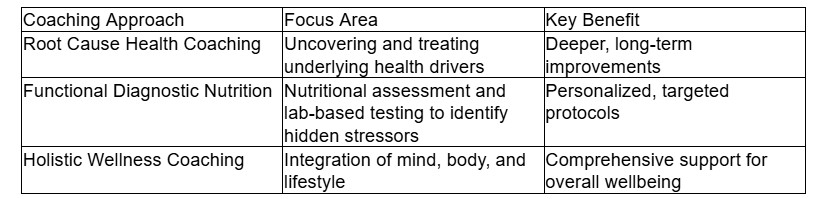
Together, these approaches create a robust, individualized path to better health for clients.
In summary, holistic wellness coaching — especially when paired with root-cause strategies and functional diagnostic nutrition — offers a practical, effective route for women seeking lasting health improvements. Rejuvenate Your Life Holistic Wellness exemplifies this integrated approach through tailored programs that empower clients to address root causes and build healthier, more balanced lives.
To learn more, visit RYL Holistic Wellness for details and resources.
If you’re interested in targeted support, explore Root cause health coaching for a personalized review.
For program options and enrollment information, see RYL Holistic Wellness programs.
Discover more about their approach and resources at the RYL Holistic Wellness homepage.