
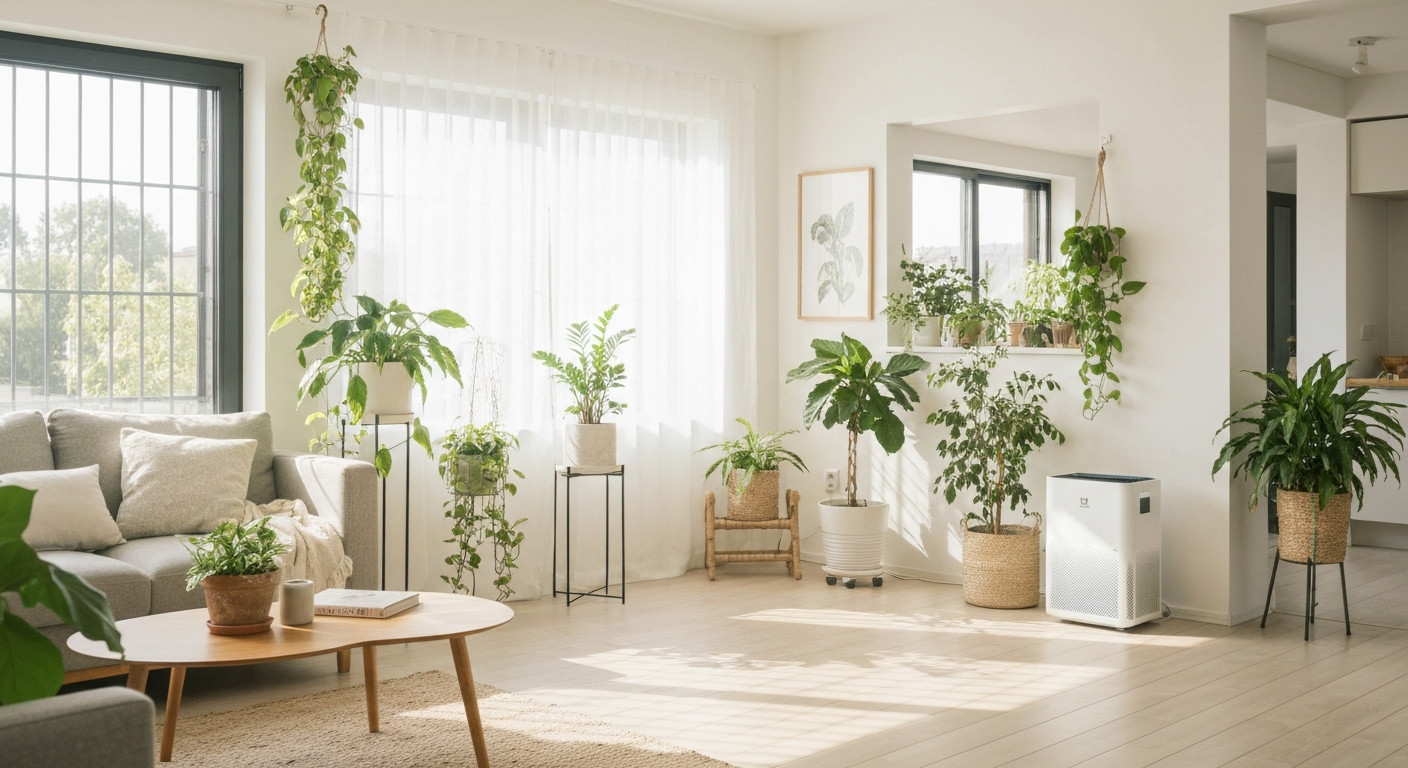
A healthy home supports comfort, focus and long-term well‑being. It's easy to overlook how everyday items and habits add to indoor pollution — and how that exposure can increase the risk of respiratory problems, allergies and ongoing irritation. This guide lays out practical, research‑backed ways to improve indoor air naturally: from preventing mold and choosing low‑toxicity cleaners to improving ventilation and managing humidity. With a few steady changes, you can make your home safer and more comfortable for everyone who lives there.
Evidence shows indoor spaces often concentrate pollutants at higher levels than outdoors, so thoughtful, proactive steps — including emerging biological purification approaches — deserve consideration.
Biological Systems for Indoor Air Quality and Green Purification
Studies of human exposure to indoor air pollution show indoor spaces can be at least twice as polluted as outdoor environments. Long‑term exposure brings measurable health risks. Biological systems for indoor air purification are gaining attention as a “green” alternative to conventional mechanical or chemical methods, with potential benefits for indoor environmental quality, energy use and occupant comfort — alongside new implementation challenges and opportunities for buildings and residents.
Volatile organic compounds emitted by conventional and “green” cleaning products in the US market, 2023
How can you improve indoor air quality naturally and effectively?
Improving indoor air naturally means reducing pollutants without introducing more harsh chemicals. Simple, practical steps — like adding certain houseplants, improving airflow, and choosing gentler cleaning options — can lower indoor toxins and make rooms feel fresher. Combining a few complementary strategies tends to produce the best results.
Begin with the rooms you and your family use most: bedrooms, living areas and home offices. A focused approach — cleaning and replacing filters, boosting ventilation in kitchens and bathrooms, and cutting back on chemical sources in high‑use rooms — typically delivers quicker, measurable gains than trying to change everything at once.
Easy, low‑effort habits include setting a weekly cleaning routine, airing rooms when outdoor air is good, and placing activated charcoal pouches or similar odor absorbers in problem spots. Over a few weeks these routines lower background pollutants and make persistent sources easier to identify and fix.
What are common indoor air pollutants and where do they come from?
Common indoor pollutants include volatile organic compounds (VOCs), particulate matter, mold spores and carbon monoxide. These originate from cleaning products, paints, furniture and building materials, and from outdoor air that seeps in. Over time, exposure can cause headaches, breathing irritation and allergic reactions. Finding the sources is the first step to reducing risk.
To spot problem sources, check for damp areas, strong chemical smells after painting or cleaning, and dusty or blocked HVAC vents. Notice whether symptoms like sneezing or headaches follow specific activities — vacuuming, using scented products or cooking. Observing patterns helps you apply the right fixes instead of guessing.
Which natural methods and air purifiers best enhance air quality?
Several accessible, natural options can help. Houseplants such as spider plants, peace lilies and snake plants can absorb trace airborne compounds and improve the feel of a room. Activated charcoal and carbon filters remove odors and many VOCs. Essential‑oil diffusers can add a pleasant scent, but use them sparingly if anyone has sensitivities. Regularly opening windows and running exhaust fans in kitchens and bathrooms also reduces pollutant buildup.
Plants and passive charcoal contribute to a healthier indoor environment, but they don’t replace mechanical filtration when particle removal is needed. For particle‑heavy situations or during wildfire smoke events, combine natural methods with a HEPA‑capable air purifier to clear fine particles that plants and passive filters cannot remove efficiently.
Choose an air cleaner by matching capacity to room size and considering filter types: HEPA for particles, activated carbon for odors and VOCs, or combined units for mixed problems. For many homes, a compact HEPA unit in the bedroom and a larger purifier for shared living spaces offer balanced protection without excessive energy use.
What are the most effective mold prevention and removal techniques?
Mold affects health and building integrity, so keeping moisture under control is essential. Manage humidity, ventilate well, repair leaks quickly and dry wet materials promptly. When mold appears, follow safe removal steps to avoid spreading spores and recontamination.
Prevention is easier and cheaper than remediation. Inspect basements, crawlspaces, window frames and areas behind appliances regularly — small leaks are simple to fix but can lead to extensive mold over time. Use moisture absorbers or dehumidifiers in persistently damp rooms and avoid storing fabrics where airflow is poor.
How does mold grow and what conditions promote it?
Mold grows when spores land on damp, nutrient‑rich surfaces with warmth and poor airflow. High humidity, inadequate ventilation and untreated leaks encourage growth. Eliminating those conditions is the most reliable prevention strategy.
Homes in humid climates or with poor exterior drainage are at higher risk, as are places where condensation forms on cold surfaces. Small fixes — insulating cold water pipes, ensuring dryer vents exhaust outside, and running bathroom fans during and after showers — interrupt the moisture cycle molds need.
What step-by-step methods can prevent and remediate mold in homes?
To prevent and remediate mold in homes, follow these step‑by‑step methods:
- Control Humidity: Keep indoor humidity below about 50% using dehumidifiers or air conditioning as needed.
- Improve Ventilation: Increase airflow in moisture‑prone areas like bathrooms and kitchens with vents, fans, or open windows when air quality allows.
- Address Water Leaks: Repair plumbing, roof or appliance leaks promptly to stop moisture from accumulating.
- Clean Regularly: Remove visible mold with non‑toxic cleaners and dry areas completely to prevent regrowth.
When cleaning small mold patches, wear gloves and a mask to limit inhalation and avoid spreading spores; contain the area and vent it outdoors where possible. Porous materials (textiles, ceiling tiles) with extensive mold are often safest to remove and replace because spores can remain embedded and reappear later.
For persistent or large infestations, hire a qualified remediation professional. They can identify hidden moisture sources or structural problems that cause recurrence and recommend containment and repairs beyond routine cleaning.
Which non-toxic cleaning products and building materials support a healthy home?
Choosing non‑toxic cleaning products and low‑emission building materials reduces chemical exposure and supports better indoor air. Simple ingredients like vinegar, baking soda and selected essential oils can clean effectively without the fumes many conventional products produce.
When buying products, look for clear ingredient lists and certifications that focus on low emissions and fewer volatile chemicals. For renovations, choose low‑VOC paints, adhesives and sealants; these keep indoor air fresher during and after work and reduce off‑gassing that can linger for weeks.
What are the benefits of using non-toxic cleaning products?
Non‑toxic cleaners lower VOCs and other harmful emissions, reducing chemical exposure for children, pets and sensitive people. Many are biodegradable and more environmentally friendly. When used correctly, these options are effective for everyday cleaning tasks.
Practical tips: use a vinegar‑and‑water mix for glass and general surfaces (avoid vinegar on natural stone), baking soda for gentle scrubbing and odor removal, and diluted castile soap for floors and counters. For tough grease, a paste of baking soda with a little dish soap applied and rinsed often works well without heavy solvents.
Studies comparing conventional and “green” cleaning products show differences in VOC emissions and reinforce the value of choosing lower‑emission alternatives.
Green Cleaning Products and Indoor Air Quality Impact
Many products are labeled green, non‑toxic or safer for people with asthma and allergies. This study measures how cleaning products and air fresheners — both conventional and green‑market items — affect indoor air by tracking volatile organic compounds (VOCs) released during typical use.
Volatile organic compounds emitted by conventional and “green” cleaning products in the US market, 2023
How do green building materials reduce chemical exposure indoors?
Green building materials — such as low‑VOC paints, bamboo or cork flooring and recycled insulation — are designed to release fewer pollutants. Choosing them lowers indoor emissions, improves air quality and supports long‑term health and sustainability in your home.
When planning renovations, ask suppliers for product emission statements or data sheets. Install ventilation and allow adequate airing after new finishes are applied, and when possible schedule major work during dry, warm weather so windows can be opened and off‑gassing dissipates faster.
How do ventilation and humidity control improve indoor environmental health?
Ventilation and humidity control are central to indoor environmental health. Good ventilation replaces stale air with fresh outdoor air, while managing humidity reduces mold, dust mites and other allergens. Together they make indoor spaces healthier and more comfortable.
Assess your home’s ventilation by checking whether air feels stagnant in closed rooms or if vents are blocked by furniture. Simple fixes — clearing vent paths, running kitchen and bathroom fans, and using windows strategically — improve air turnover without major equipment changes.
What types of ventilation systems are best for healthy homes?
Mechanical systems like heat recovery ventilators (HRVs) and energy recovery ventilators (ERVs) deliver controlled, energy‑efficient air exchange. Natural ventilation — opening windows and using vents — also works well when outdoor air quality is acceptable.
HRVs and ERVs are especially helpful in tightly sealed homes because they bring in fresh air while limiting energy loss. Regular maintenance — cleaning or replacing intake filters and checking that ductwork is sealed — preserves performance and keeps contaminants out of the system.
How does humidity control prevent mold and allergens?
Keeping relative humidity between about 30% and 50% helps limit mold growth and reduces dust‑mite populations. Use dehumidifiers where needed, and pair humidity control with proper ventilation to keep indoor allergens in check.
Monitor humidity with an inexpensive hygrometer placed in commonly used rooms and basements. Note seasonal patterns: summer often requires dehumidification while winter may need added humidity in dry climates. Balancing humidity eases stress on respiratory systems and reduces conditions that favor fungi and mites.
Research highlights moisture control as a key factor in preventing indoor mold — often more important than temperature alone.
Humidity Control for Indoor Mold Prevention
This study supports sustainable strategies for managing indoor mold, a common pollutant with known health effects. The findings emphasize moisture control over temperature as the critical factor in preventing mold growth.
Temperature versus relative humidity: Which is more important for indoor mold prevention?, H Wu, 2022
What are the health impacts of indoor pollutants and how can you protect your family?
Indoor pollutants can worsen respiratory and allergic conditions, especially in children, older adults and people with preexisting health issues. Reducing pollutant levels and limiting exposure are important ways to protect household health.
Protect vulnerable household members by focusing on their sleeping areas: place a HEPA air purifier near the bed, wash bedding regularly and keep bedroom humidity low. If symptoms persist despite changes, consult a healthcare professional and note any indoor sources or events that seem linked to symptoms.
Which respiratory and allergic conditions are linked to poor indoor air?
Poor indoor air quality can trigger or worsen asthma, allergic rhinitis and chronic obstructive pulmonary disease (COPD). Mold, dust mites and pet dander are common offenders — controlling these sources can reduce symptoms.
Managing exposure combines environmental changes with behavioral adjustments: keep pets out of bedrooms, use washable covers, and avoid strong fragrances. For allergy sufferers, a layered approach — source control, filtration and humidity reduction — gives the most consistent relief.
What case studies and statistics highlight the importance of a healthy home?
Research finds that homes with better ventilation and lower pollutant levels report fewer respiratory problems among occupants. These results show that practical home changes can deliver measurable health benefits.
Case examples from renovation projects often show immediate improvements after replacing high‑emitting materials and improving ventilation; households that switch to regular cleaning with low‑emission products also commonly report fewer odors and sensitivity reactions.
How can you maintain a healthy home environment year-round?
Maintaining a healthy home depends on consistent, simple routines. Seasonal checks and small daily habits keep air cleaner and prevent problems before they grow.
Create a seasonal maintenance plan: spring and fall are good times to check rooflines, gutters and exterior drainage; late winter is ideal for inspecting humidifiers or dehumidifiers; and summer works well for cleaning dryer vents and servicing fans. A short, regular checklist prevents many common issues from escalating.
What routine practices help sustain indoor air quality and mold prevention?
To sustain indoor air quality and prevent mold, try these routine practices:
- Regular Cleaning: Dust and vacuum often to remove allergens and settled particles.
- Monitor Humidity: Use a hygrometer to track humidity and adjust with dehumidifiers or ventilation as needed.
- Inspect for Leaks: Check plumbing, basements and roofs periodically and repair leaks quickly to avoid moisture build‑up.
Rotate tasks so maintenance feels manageable: commit to a short daily habit (10–15 minutes of focused cleaning), a weekly check (vent filters, laundry) and a seasonal exterior and attic walk‑through to catch slow‑developing problems early.
How can you monitor and measure indoor air quality effectively?
Use reliable air quality monitors to track pollutants, particulate levels, humidity and temperature. Regular measurements reveal trends, help prioritize actions and confirm that your solutions work.
When using a monitor, log readings at consistent times (for example: morning, midday and evening) and note activities that may affect readings (cooking, cleaning, HVAC use). Over several weeks this log shows patterns and helps pinpoint the most effective changes.
Frequently asked questions about creating a healthy home environment
Below are concise answers to common questions about improving indoor air and reducing allergens at home.
How do I reduce allergens indoors safely and naturally?
Reduce allergens by using HEPA purifiers, washing bedding in hot water, grooming pets regularly and keeping humidity low. Choose non‑toxic cleaners and maintain good airflow to minimize allergen buildup.
Everyday tips: place doormats and leave shoes at the door to limit tracked‑in pollen, pick washable rugs and use washable covers for pillows and mattresses. If someone has strong sensitivities, reduce clutter that traps dust and prioritize easy‑to‑clean surfaces.
Are non-toxic cleaning products as effective as conventional ones?
Yes — when used correctly, many non‑toxic cleaners work as well as conventional products for routine cleaning. They rely on proven natural ingredients and cut harmful fumes and residues.
For stubborn stains or heavy grease, combine scrubbing with non‑toxic agents like baking soda or a small amount of non‑toxic soap. Often the right technique and a bit of persistence deliver the same results without stronger chemical cleaners.
Conclusion
Creating a healthy home environment significantly enhances indoor air quality, reducing allergens and promoting overall well-being. By implementing simple, natural strategies such as improving ventilation, using non-toxic cleaning products, and managing humidity, you can foster a safer living space for your family. These proactive measures not only protect health but also contribute to long-term comfort and sustainability. Start your journey towards a healthier home today by exploring our resources and tips for maintaining optimal indoor air quality.